Menopause and Heartburn: How to find relief
As a registered dietitian, I’m often asked about the link between menopause and heartburn.
Many women are surprised to find themselves experiencing heartburn for the first time during menopause.
While it is not commonly associated with menopause, research indicates that women going through the menopausal transition are more than three times more likely to experience heartburn( also known as acid reflux).
The good news is that there are effective treatments and lifestyle changes to help us mange.
Let’s explore the connection between menopause and heart burn, the causes of acid reflux, and the best ways to treat and prevent it.

Does menopause cause heartburn?
Menopause can cause or worsen heartburn due to hormonal changes that affect the muscles in the digestive tract.
There is a circular muscle located at the junction of the esophagus and the stomach, called the Lower Esophageal Sphincter(LES).
Its job is to ensure that the contents of the stomach stay in the stomach and do not cause irritation or reflux in the esophagus.
When the LES is weakened, stomach acid may flow back up into the esophagus, resulting in heartburn.
What does heartburn feel like?

Heartburn is the burning sensation in the chest or throat that is caused by stomach acid rising into the esophagus.
The sensation is often described as a feeling of warmth, heat, or pressure that starts in the upper chest and may spread up to the neck or throat.
Some people also experience a sour or bitter taste in the mouth, especially after eating or lying down.
This discomfort can be mild to severe and may last for a few minutes or several hours.
Is heartburn dangerous?
Heartburn can be uncomfortable and disruptive to daily life, but it is generally not a serious condition on its own.
With some simple changes in lifestyle and if needed, medications, it can be managed.
If it occurs frequently and is severe, it can lead to a condition called gastroesophageal reflux disease( GERD).
GERD can damage the esophagus, produce ulcers, and even lead to esophageal cancer.
It is important to note that postmenopausal women on hormone replacement therapy have a much higher risk of developing GERD and Barrett’s esophagus. The risks are over six times greater in women on HRT compared to those not on HRT.
How can I stop heartburn naturally during menopause?
Here are 10 simple lifestyle changes you can try to stop heart burn naturally:
1. Eat small, frequent meals. Eating large meals can put pressure on the stomach and increase the risk of acid reflux. Instead, try eating smaller meals more frequently throughout the day. Eating regularly has also shown to reduce indigestion.

2. Reduce your intake of fatty foods. Fried foods or foods high in fat tend to take longer to digest and can increase the risk of acid reflux.
3. Know your trigger foods. Although there is no concrete evidence linking specific foods to GERD, many people report that certain foods do make their reflux symptoms worse.
Foods that cause heartburn the most include:
- tomatoes and tomato sauces
- citrus fruits
- spicy food
- coffee
- fizzy drinks
- alcohol
- chocolate
Keeping track in a food diary can be really helpful for identifying you own personal triggers.
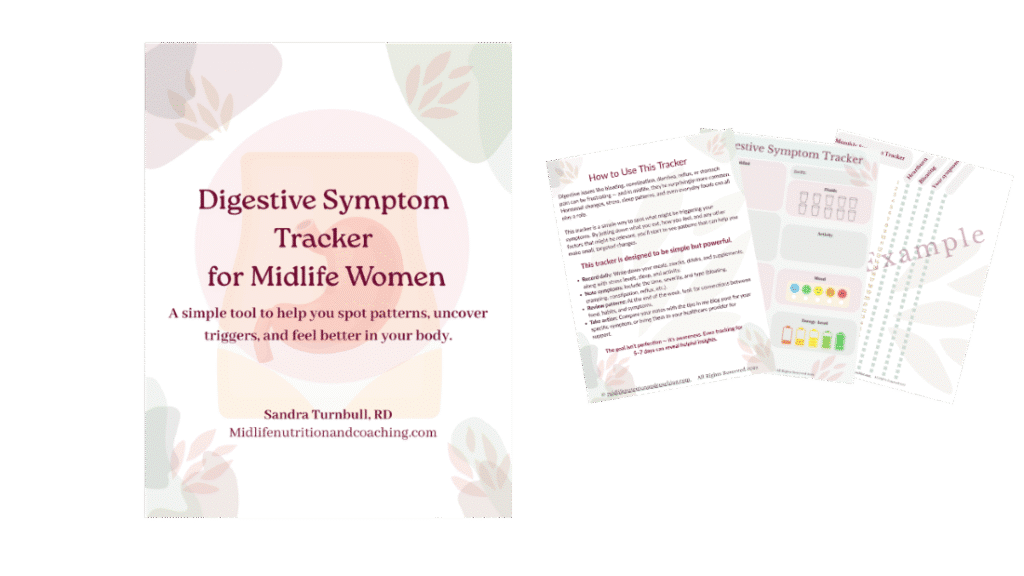
Digestive Symptom Tracker for Midlife Women
A simple tool to help you spot patterns, uncover
triggers, and feel better in your body.
Start tracking today and finally feel in control.
4. Try some psyllium. Psyllium(Metamucil), a high-fiber food, can improve gut motility, and potentially lower stomach acidity. In a 2018 trial, 60% of participants experienced symptom relief after taking 1 teaspoon of psyllium husk three times a day- for just 10 days! All the participants had a lower fiber diet to start.
5. Avoid lying down for an hour after eating. Lying down right after eating can increase the risk of acid reflux, so it’s important to stay upright for at least an hour after eating.
Eating too close to bedtime can increase the chance of acid reflux, so try to avoid eating for at least a few hours before going to bed.

6. Sleep on an Incline. Lying flat can make heartburn worse by letting stomach acid creep up into your esophagus. Elevating your upper body helps gravity keep things down where they belong.
Instead of just stacking pillows (which often shifts in the night), try a wedge pillow that lifts your upper body by 5 to 15 degrees.
Bonus tip: Sleeping on your left side with your upper body slightly elevated may further reduce reflux symptoms. It’s a simple shift that can make a big difference.
7. Stop Smoking. Smoking makes acid reflux worse. It weakens the muscle that keeps stomach acid where it belongs and increases your risk of complications.
If you smoke, quitting is one of the best things you can do for your digestion (and your overall health). Talk to your doctor about support options like nicotine replacement or counseling.
8. Wear loose fitting clothing. Tight clothing, especially around the waist, can put extra pressure on the stomach, potentially pushing acid upwards into the esophagus.
9. Exercise. Exercise can help and hurt when it comes to acid reflux. Movements that increase pressure on your belly—like heavy lifting, crunches, or high-impact workouts—can actually trigger reflux, especially if you’ve just eaten.
To stay comfortable, try exercising on an empty stomach. Ideally, wait at least two hours after eating so your food has time to move out of your stomach.
If certain activities bring on heartburn, switch to gentler options like walking or using an elliptical.
Once your symptoms are under control, you can slowly work your way back to higher-intensity workouts.
10. Manage your stress. Stress doesn’t cause heartburn directly, but it can make it worse.
When you’re in “fight or flight” mode, your body ramps up stomach acid and slows digestion—both of which can trigger reflux.
Stress reduction techniques such as meditation, yoga, and deep breathing exercises can help improve symptoms.

Many guidelines do recommend weight loss as part of treatment for acid reflux. And we do know that there is an association between those who live in larger bodies and reflux.
But is it really important to remember that association is not the same as causation.
There simply are no well-designed studies that have shown that weight loss improves GERD symptoms in the long term.
Since long term weight loss is not sustainable for the vast majority it’s unlikely to be helpful here.
It’s better to focus on realistically do-able strategies.
Medications to Treat Menopausal Acid Reflux

If you’re experiencing the occasional bout of acid reflux during menopause, there are several medications that can provide relief.
Antacids such as Maalox, Gaviscon and Tums, work by neutralizing stomach acid., They offer fast acting but short-lived relief. Use them for occasional or mild acid reflux symptoms.
H2 blockers such as Pepcid, Zantac, or Tagamet work by reducing acid production.
They block histamine, a chemical in the body that triggers acid production in the stomach. They can be effective for more frequent or severe symptoms. They do take longer to kick in (30-60 minutes) but can give relief up to 10 hours or so.
Proton pump inhibitors (PPIs) such as Nexium, Prilosec or Prevacid, drastically reduce the amount of acid your stomach produces.
They are more likely to be suggested if you have been diagnosed with GERD.
PPIs typically take several days to become effective.
PPIs can reduce the absorption of calcium, magnesium, and vitamin B12.
Talk with your health care provider about the safety of long-term use.
When to seek help?

Talk with your doctor if you are experiencing any of the following:
- Heartburn more than twice a week
- Symptoms that don’t improve with lifestyle changes or OTC meds
- Pain or trouble swallowing, or food feeling stuck
- Unexplained weight loss, vomiting, or diarrhea
- Chest pain—especially with shortness of breath or pain in your arm or jaw
- A history of GI issues like ulcers or stomach surgery
See also: Snacks for GERD: Healthy Options to Ease your Symptoms
Curious about other gut issues in menopause? Check out: What the Heck is Going on With My Gut

Looking for ongoing support around food, body, and menopause?

Hi, I’m Sandra!
I’m a registered dietitian and body confidence coach specializing in midlife health and menopause nutrition.
I offer virtual nutrition counselling and coaching for women in British Columbia, Canada.
I help women thrive by moving away from restriction and toward nourishment—through practical strategies and compassionate support that honor your changing body.
My focus is on helping you feel confident, strong, and well-fed.
Learn more about working with me