Protein and Bone Health in Menopause: You Need More Than Just Calcium
When most women think about bone health, two nutrients usually come to mind right away: calcium and vitamin D.
Protein rarely makes the list.
And yet, protein is the third critical pillar of bone health—right alongside calcium and vitamin D. Without enough protein, bones don’t just lose strength over time… they lose the structure they’re built on.
Let’s talk about what protein actually does for your bones during menopause, how much you need, and what kinds of protein best support long-term bone strength.
Key Takeaways
Protein is part of what makes bones strong, helps calcium do its job, and protects against fractures by preserving muscle. In menopause, the minimum recommendation is often not enough for optimal bone and muscle health.

Why Bone Health Matters More in Menopause
Estrogen plays a protective role in keeping bones strong. As levels decline in menopause, bone breakdown speeds up and bone rebuilding slows down, gradually increasing the risk of osteopenia and osteoporosis.
This makes midlife an important window of prevention. What you do now with nutrition, movement, and daily habits can meaningfully shape your bone strength in the decades ahead.

Protein’s Job in Bone Health: More Than Just Muscle
We often think of protein as “the muscle nutrient,” and that’s true—but it also plays a direct role in bone itself.
Bone is not just hard mineral. About one-third of bone is made of protein, mostly in the form of collagen. This protein matrix provides the framework that calcium and other minerals attach to. It gives bone its:
- Flexibility
- Shock absorption
- Resistance to cracking
Without enough protein, bones may become more brittle—even if calcium intake looks fine.
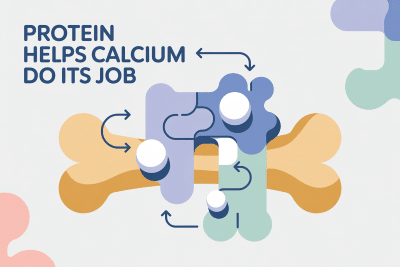
Protein Helps Calcium Do Its Job
Protein and calcium don’t work in isolation. Adequate protein intake actually helps improve calcium absorption in the gut.
The benefits of higher protein intake on bone health depend on having enough calcium available. With enough calcium on board, protein supports stronger bones. When calcium is too low, that benefit can be blunted.
This is why bone health in menopause is always about patterns, not single nutrients.

Protein, Muscle, and Fall Prevention
Protein also protects bones in a less obvious—but equally important—way: through muscle strength.
Adequate protein helps preserve:
- Muscle mass
- Strength
- Balance
Stronger muscles mean:
- Fewer falls
- Better stability
- Lower fracture risk
So even when protein isn’t acting directly on bone tissue, it’s still quietly protecting bones by reducing the chance of injury.
Read more about the importance of protein in menopasue: Protein in Menopause- Nutrition Strategies for Midlife
How Much Protein Do You Actually Need in Menopause?
The official minimum protein recommendation for adults is: 0.8 grams per kilogram of body weight per day.
This is the bare minimum to prevent deficiency — not necessarily the best target for bone or muscle health in menopause.
For postmenopausal women, I recommend aiming higher:
- 1.0–1.2 g/kg per day for most women
- 1.3–1.5 g/kg per day if you are consistently weight training
This higher range better supports:
- Bone structure
- Muscle preservation
- Strength
- Balance and fall prevention
Here is a sample of what a day might look like:
Breakfast (~25–30 g protein)
¾–1 cup Greek yogurt
2 Tbsp nuts or seeds
½–1 cup berries
Lunch (~25–30 g protein)
Sandwich or wrap with:
3–4 oz chicken, tuna, tofu, or tempeh
Whole-grain bread or wrap
Vegetables + hummus
Snack (~10–15 g protein)
¾ cup cottage cheese
Handful of berries
or
1 cup soy milk
Small handful of almonds
Dinner (~25–30 g protein)
3–4 oz salmon, chicken, tofu, or tempeh
1 cup quinoa or farro
Roasted vegetables
Which protein is best for bone health?
There is no single “best” protein for bones. A mix of high-quality animal and plant proteins works well for most women, as long as you are getting enough overall.
If women need to increase their protein intake in menopause, I usually encourage them to focus on adding more plant-based protein.
There are a few reasons for this:
- More fiber: Most women are under-eating fiber, and plant proteins help close that gap.
- Less saturated fat: This supports heart health, which becomes more important after menopause.
- Broader nutrient intake: Plant proteins often come with magnesium, potassium, and antioxidants that also support bone and overall health.

Looking for easy ways to add more plant protein?
Try:
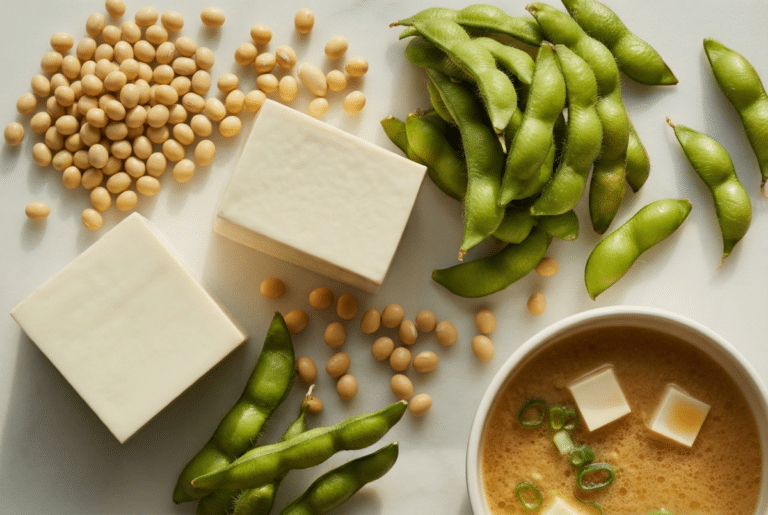
- Adding tofu or edamame to a stir-fry
- Using soy milk in smoothies
- Choosing beans or lentils a few times a week
- Snacking on nuts and seeds
Focusing on foods like tofu, soy milk, edamame and tempeh can be helpful to bones in menopause. These soy foods contain isoflavones—plant compounds that have been shown to:
- Stimulate bone formation
- Reduce bone loss after menopause
Check out: 11 Dietitian-Approved High Protein Vegetarian Snacks

What about Protein Powders and Collagen Supplements?
I generally like a food first approach. But supplements can be useful tools when intake is low or appetite is poor.
Protein powders
These can help you meet your daily protein target when:
- Meals are small
- Appetite is low
- Convenience matters
They are a support—not a requirement.
Collagen peptides
Emerging research suggests that collagen, particularly when combined with calcium and vitamin D, may:
- Increase bone mineral density
- Improve markers of bone formation
This is promising, but honestly I focus my clients on getting enough protein first.
If you’re thinking about bone health in menopause, protein deserves a place right alongside calcium and vitamin D. It supports the structure of bone, protects muscle and balance, and helps the whole system work better.
Here is more information on other nutrients you may want to consider for your bone health:

Looking for ongoing support around food, body, and menopause?

Hi, I’m Sandra!
I’m a registered dietitian and body confidence coach specializing in midlife health and menopause nutrition.
I offer virtual nutrition counselling and coaching for women in British Columbia, Canada.
I help women thrive by moving away from restriction and toward nourishment—through practical strategies and compassionate support that honor your changing body.
My focus is on helping you feel confident, strong, and well-fed.
Learn more about working with me