

Do Women Over 50 Need Iron? What You Need to Know.
Are you a woman over 50 wondering if iron still matters? It does.
Iron is the most common nutrient deficiency in the world, and it can still affect energy, focus, and overall health after menopause. Let’s explore why iron is important for women over 50, how much you need, how to spot low iron, and when supplements may be helpful.
Key Takeaways
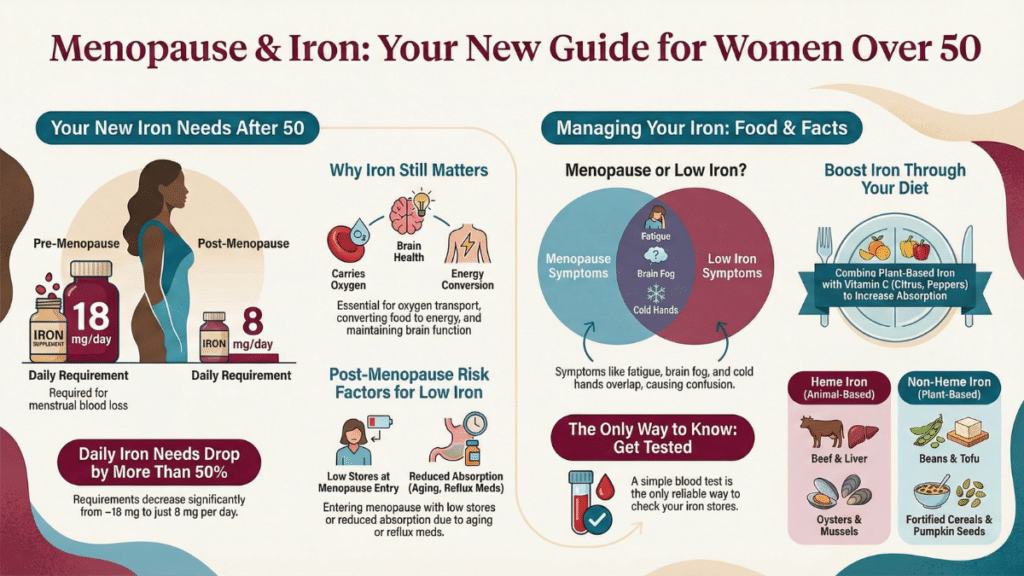
Yes—women over 50 still need iron, but in lower amounts than before menopause. Iron supports energy, brain health, and overall well-being. Because symptoms of low iron can look like menopause symptoms, testing—not guessing—is the best way to know if iron is needed.

What does iron do for your body?
Iron is a mineral your body needs to function well. It plays many important roles, especially as we age.
One of iron’s main jobs is helping red blood cells carry oxygen from your lungs to the rest of your body. When iron is low, you may feel tired, weak, or short of breath.
Iron also helps your body turn food—carbohydrates, fats, and protein—into energy. Low iron can mean lower energy for daily life.
It helps our brains work at their best, helping us think, remember things, and stay focused. If we’re low on iron, it can mess with our mood and make it harder for us to concentrate.
It also plays a role in immune health by helping your body make cells that fight infection.
Finally, iron helps to regulate body temperature. It helps our bodies use energy efficiently, which keeps us at a comfy temperature.

How much iron do women need?
Iron needs change over the lifespan.
- Women ages 19–50 need about 18 mg of iron per day
- Athletes and those who sweat heavily may need more
- Vegetarian and vegan women typically need more iron (about 32 mg per day)
- After menopause (12 months without a period), iron needs drop to 8 mg per day
Why is iron important for women over 50?
Even though iron needs drop after menopause, iron is still important for energy, brain health, and overall well-being.
Many women enter menopause with low iron stores, especially if they had heavy periods during perimenopause.
As we age, iron absorption often becomes less efficient. During the menopausal transition, women are also more likely to experience heartburn or GERD.
Common medications for reflux, such as proton pump inhibitors (PPIs) like Nexium or Prilosec, reduce stomach acid. This can make it harder for your body to absorb iron from food and supplements.
How do I know if I am low in iron?
Low iron can be hard to spot because many symptoms overlap with menopause. Still, there are some common signs to watch for:

- Fatigue or weakness, even with enough sleep
- Pale skin or nail beds
- Shortness of breath, especially with activity
- Headaches or dizziness
- Restless legs, often worse at night
- Heart palpitations
- Cold hands and feet
- Poor concentration or brain fog
As so many of my clients struggle with brain fog this one is worth highlighting. A small 2025 study of women ages 40–65 found that higher ferritin levels (a marker of iron stores) were linked with better cognitive performance. This suggests iron status may play a role in brain fog during perimenopause and early menopause.
Because symptoms overlap so much, a blood test is the only way to know if symptoms are due to low iron or menopause itself.
Iron-deficiency anemia

Iron-deficiency anemia happens when iron levels are low enough to reduce hemoglobin, the protein that carries oxygen in your blood.
If iron deficiency anemia is suspected, a healthcare provider will review your symptoms, medical history, and may order blood tests such as:
- Complete Blood Count (CBC) – checks hemoglobin levels
- Serum ferritin – shows iron stores
- Iron studies – including serum iron, transferrin saturation, and TIBC
Once diagnosed, the cause needs to be identified. Common causes include low dietary intake, blood loss, or gastrointestinal issues.
The Women’s Health Initiative found that 5.5% of postmenopausal women had iron-deficiency anemia, with low iron intake being the largest risk factor.

Good Sources of Iron
Eating iron-rich foods can help support healthy iron levels.
Heme iron, found in animal foods like meat and fish, is absorbed more easily than non-heme iron, found in plant foods.
Top five sources of heme iron are:
- Liver (beef or chicken)
- Oysters
- Mussels
- Beef
- Sardines
Top five sources of non-heme iron are:
- Iron fortified breakfast cereals
- Beans (black, kidney, chickpea)
- Tofu
- Wheat Germ
- Pumpkin Seeds
Vitamin C improves iron absorption, especially from plant foods. Good sources include citrus fruits, strawberries, bell peppers, tomatoes, and broccoli.
Calcium can reduce iron absorption. Try to eat calcium-rich foods or supplements at a different time than iron-rich meals.
Tea contains tannins that reduce iron absorption from plant sources. It’s best to drink tea between meals rather than with meals.

Should I take an iron supplement?

If you’re still having periods or not getting enough iron from your diet, iron supplementation might be helpful. But I wouldn’t start an iron pill unless you have talked with your doctor and had a blood test.
If you’ve been diagnosed with iron deficiency anemia, your doctor may recommend a high dose to get your iron levels up quickly.
Iron supplements can come with some side effects. The most common one is an upset stomach or feeling nauseous.
You might also experience diarrhea, dark stools, or constipation. If you’re dealing with constipation, adding more fiber to your diet, drinking more fluids or trying a stool softener can provide some relief.
To minimize side effects, you can start with a low dose of iron and gradually increase it until you reach the recommended daily amount.
Iron supplements can interact with some medications, including thyroid medications and treatments for restless leg syndrome. Reflux medications can also reduce iron absorption from both food and supplements.
It is a good idea to check with your medical provider or pharamcist before you start to supplement.
Can you take too much iron?
Yes. Too much iron can be harmful.
High doses of iron can cause stomach upset, nausea, vomiting, and diarrhea.
Over time, excess iron can build up in the body, leading to iron overload or hemochromatosis. This can damage organs such as the liver, heart, and pancreas.
For this reason, iron levels need to be checked regularly.
Understanding the important role of iron for women over 50 is key to maintaining optimal health and vitality. By ensuring you meet the recommended daily iron intake through a well-balanced diet and, if necessary, supplementation under the guidance of a healthcare provider, you can support your overall well-being.
Found this article helpful? You might also want to read Understanding the Role of B12 in Menopause.

Looking for ongoing support around food, body, and menopause?

Hi, I’m Sandra!
I’m a registered dietitian and body confidence coach specializing in midlife health and menopause nutrition.
I offer virtual nutrition counselling and coaching for women in British Columbia, Canada.
I help women thrive by moving away from restriction and toward nourishment—through practical strategies and compassionate support that honor your changing body.
My focus is on helping you feel confident, strong, and well-fed.
Learn more about working with me


