Heart-Healthy Eating in Menopause: Simple Food Swaps that Support Better Cholesterol
If you’re in perimenopause or menopause don’t be surprised to hear that your cholesterol has started creeping up.
Many women tell me some version of: “I’m eating pretty much the same way I always have… so why are my labs suddenly worse?”
Cholesterol changes in menopause are common. And while hormones play a role, food still matters.
This isn’t about going on another diet. You don’t need to overhaul everything you eat. You just need a few strategic, heart‑supportive changes that can make a real difference.
Key Takeaways
Cholesterol often rises in perimenopause and menopause—even if you haven’t changed how you eat. You don’t need a strict diet to support your numbers. Small, realistic food swaps that increase fibre, improve fat quality, and add more plants can make a meaningful difference for heart health.

Why Cholesterol Changes in Menopause
As estrogen levels decline, we tend to see shifts in:
- LDL (“bad”) cholesterol going up
- HDL (“good”) cholesterol sometimes going down
- Triglycerides(another type of fat in our blood) creeping higher
- More fat stored around the abdomen
Layer on normal aging, stress, sleep changes, and often less daily movement, and our risk of heart attacks and stroke goes up.
So many of us worry about breast cancer or dementia but heart disease is the leading cause of death in women.
I’m not sharing that to scare you. I’m sharing it to explain why cholesterol suddenly feels more important than it did earlier in life.
I often tell clients: “You didn’t suddenly start doing anything wrong. Your body is simply in a new phase—and it needs different support.”
While you can’t control your hormones, you can use food to support healthier cholesterol numbers and overall heart health in midlife.
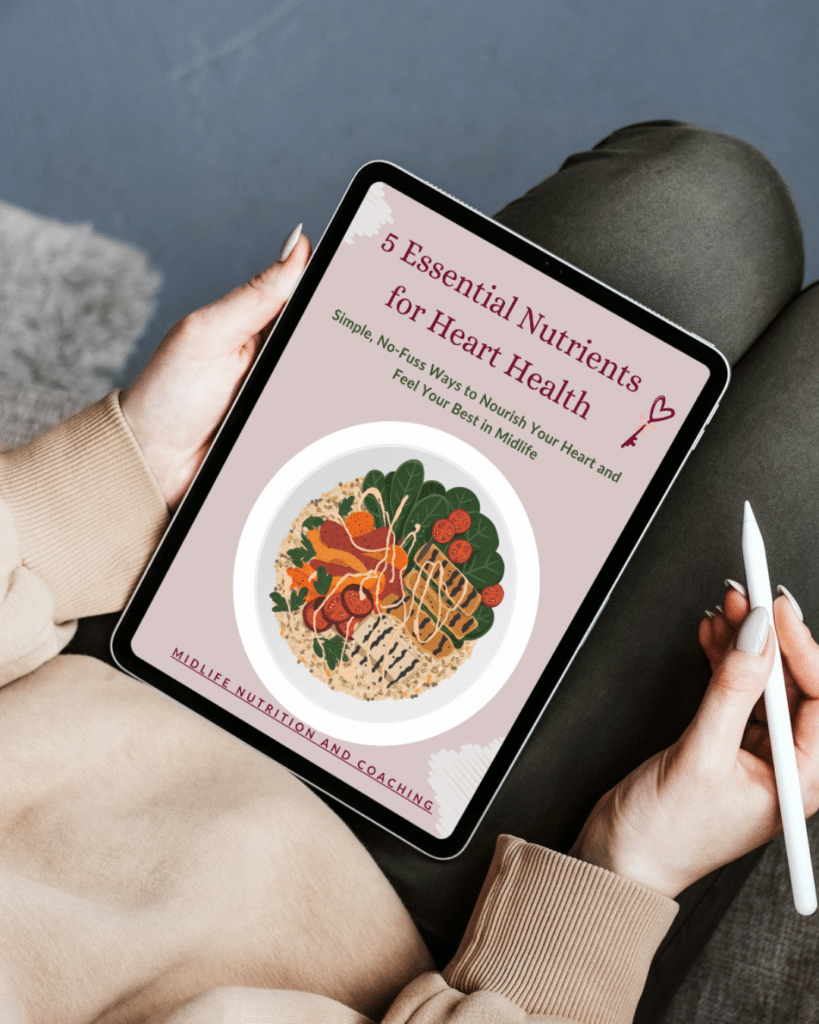
Nutrition Changes That Help Lower Cholesterol in Menopause
Before we talk swaps, it helps to understand the big picture.
1) More Soluble Fibre (and Fibre in General)
Soluble fibre helps pull cholesterol out of the body through digestion. It also supports fullness, blood sugar steadiness, and gut health.
Key sources:
- Oats and barley
- Beans and lentils
- Fruit (especially apples, pears, berries)
- High‑fibre breads and cereals
2) Better Quality Fats
Replacing some saturated fats (butter, fatty meats, cream) with unsaturated fats supports healthier cholesterol patterns.
Think:
- Olive oil
- Avocado
- Nuts and seeds
- Fatty fish (salmon, sardines, trout)

3) More Plants, Fewer Ultra‑Processed Foods
Not perfection. Not never. Just shifting the pattern toward more plants and less processed foods.
Breakfast Ideas for High Cholesterol in Menopause
Breakfast 1
Before: White toast + butter + jam
After: High‑fibre bread + natural peanut butter + sliced banana
What changed:
*More fibre from the bread and fruit
*More unsaturated fat from peanut butter
*Better staying power
Breakfast 2
Before: Low fiber cereal + milk
After: Oatmeal topped with berries and walnuts
What changed:
- Soluble fibre from oats
- Antioxidants from berries
- Unsaturated fats from walnuts
A client once told me she “hated oatmeal.” We experimented with overnight oats, cinnamon, and frozen berries. Two weeks later she said, “I’m not in love with it—but I feel full until lunch.” That was a win.
Breakfast 3
Before: Bagel + cream cheese
After: Whole‑grain bagel + avocado + egg
What changed:
* More fibre
* Less saturated fat
* Added protein and unsaturated fat
For more Breakfast ideas check out: Best Breakfast Foods to Lower Cholesterol: Make Mornings Easy
Lunch Ideas to Support Healthy Cholesterol in Menopause
Lunch 1
Before: Deli meat sandwich on white bread + mayo
After: Whole‑grain bread + hummus + turkey + lots of veggies
Why it helps:
- More fibre
- More plant foods
- Less saturated fat
Make‑it‑easy tip: Buy pre‑washed greens and pre‑sliced veggies.
Lunch 2
Before: Cheese and crackers
After: Lentil soup + whole‑grain toast + fruit
Why it helps:
- Lentils provide soluble fibre
- More volume and nutrients
- More satisfying, avoid mid-afternoon ’slump’
One client started keeping canned lentil soup at work. Her words: “It’s not fancy, but it saves me from vending‑machine lunches.”
Heart Smart Dinner Ideas
Dinner 1
Before: Large steak + mashed potato + garlic bread
After: Smaller portion of steak or swap fish/chicken + roasted sweet potato + big salad with olive oil
What changed:
- Reduced saturated fat
- More fibre
- More veggies
Dinner 2
Before: Breaded chicken + fries
After: Sheet‑pan chicken, chickpeas, and vegetables with olive oil
Why it helps:
- Added fibre from chickpeas
- Less deep‑fried food
- More veggies
Dinner 3
Before: Creamy pasta with sausage
After: Tomato-based pasta with white beans, vegetables, olive oil, and a smaller amount of sausage
Why it helps:
- Lower in saturated fat
- Higher in fibre from beans and vegetables
- Keeps familiar flavours while shifting the balance

Snack Ideas for High Cholesterol in Menopause
Rather than thinking in terms of swaps, it can be more helpful to build a short list of go-to, heart‑healthy snacks you actually enjoy.
Some options many women find realistic and satisfying:
- Greek yogurt with berries (add some cookie crumbles on top if you’re craving something sweeter)
- Veggies and hummus +/- high fiber crackers
- Popcorn +/- nuts
- Edamame pods
- Apple or pear with peanut butter
- Cottage cheese with fruit
These kinds of snacks naturally bring in more fibre, plant foods, and unsaturated fats — all of which support healthier cholesterol levels.
Check out: Heart Healthy Snacks: 14 Easy and Delicious Ways to Nourish your Heart.

How to Build Heart-Healthy Eating Habits
Most women I see struggle because they try to change too much, too fast. Real habits tend to stick when changes are small, realistic, and repeatable. Not when everything is overhauled at once.
I often remind clients that consistency beats intensity. Tiny changes, practiced over time, genuinely do add up.
Instead, start to think about layering in changes:
- Week 1: One breakfast swap
- Week 2: Add one lunch or dinner swap
- Week 3: Tweak one snack
That’s it.
Progress can often feel quiet and gradual. That doesn’t mean it isn’t working. Success can look like:
- Feeling full longer
- Better digestion
- More steady energy
- Growing confidence with food choices
Food is one important piece of cholesterol management. Genetics, hormones, stress, sleep, movement, and sometimes medication all matter too.
Use these swaps as starting points. Small shifts, repeated consistently, add up.
And please talk with your healthcare provider about your lab results and overall heart health risk.
You might also like: Smoothies to Lower Cholesterol

Looking for ongoing support around food, body, and menopause?

Hi, I’m Sandra!
I’m a registered dietitian and body confidence coach specializing in midlife health and menopause nutrition.
I offer virtual nutrition counselling and coaching for women in British Columbia, Canada.
I help women thrive by moving away from restriction and toward nourishment—through practical strategies and compassionate support that honor your changing body.
My focus is on helping you feel confident, strong, and well-fed.
Learn more about working with me